

A money-angle investigation of what stars actually put on the record — including Bryan Johnson’s stated $2 million-a-year Blueprint budget — and what the evidence will and will not justify in a likeness, insurance and booking market.
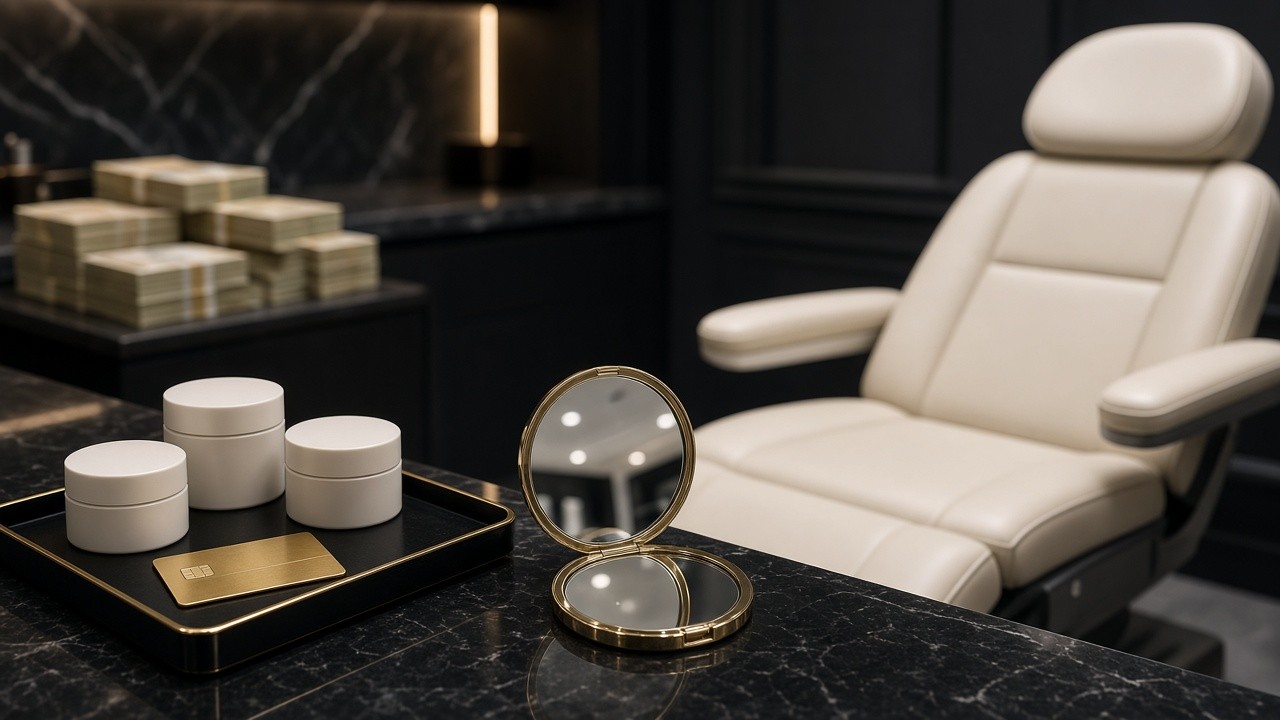
Wake up news, only at Celeb Fees: the most expensive face in the room is no longer just a film face. It is a looks economy — a private clinic, a protocol, a insurance conversation, a booking fee that assumes the talent still photographs like the contract. This is the money investigation, not a medical leaflet. We will not invent what a star spends. We will meter the market that is already on the record, and we will keep the science honest.
The one budget that has been said out loud
Bryan Johnson’s Project Blueprint, launched in 2021, is the rare celebrity-adjacent longevity project with a public price tag. In interviews and in major profiles — including Business Insider and Bloomberg’s early coverage of the spend — Johnson has said the personal protocol costs about $2 million a year. Treat that as what it is: his stated figure for a highly instrumented, personal programme, not an audited industry average and not a number we can quietly transfer onto anyone else. He has also described plasma-exchange experiments, including with his son, and later said he stopped after seeing no benefits. Netflix’s 2025 film Don’t Die turned the project into a pop product. The commercial lesson is not “spend $2 million.” It is that a face and a biomarker dashboard can now be packaged as content, as a company, and as a lifestyle brand.
What the evidence will actually pay for
Bookers and insurers should care about the split EuroCelebs investigates in depth in our companion, Anti-Ageing: Lie or Reality? Daily sunscreen has randomised human evidence against photoageing — including an Australian trial of 903 adults that found 24 per cent less measured skin ageing over four years with daily versus discretionary use. Prescription topical retinoids, especially tretinoin, have decades of trial support for photodamaged skin, with irritation as a common cost. Exercise and sleep support healthspan and how a person presents. They are not billed as time travel in any serious paper. Rapamycin’s animal and mechanistic story is strong; the 2025 PEARL trial found intermittent low doses relatively safe over 48 weeks in healthy middle-aged and older adults, with modest exploratory signals, and did not prove lifespan extension. Metformin has observational associations and a formal ageing-trial ambition; it is not a proven anti-ageing drug in healthy people. Unproven supplements, NAD hype, young-blood narratives and many IV or stem-cell clinics are, until they publish stronger evidence, a luxury spend — not a rate-card justification.
The looks economy does not bill you for what the trial proved. It bills you for what the photograph still has to look like on Monday.
Likeness, insurance, and the vitality desk
That is why the commercial stack on this network is about the face as an asset, not a miracle. Stars already lock down looks, voice and likeness because a youthful image is now a rights problem as well as a skincare one. Global Celebrity Meter has asked whether a face, eyes or body should be insured. Our Fee Meter and the book-a-celebrity desk exist because a booking assumes the person who walks out still matches the person in the deck. We do not put a fake “anti-ageing rider premium” on a named client. We do say this: the market is already pricing continuity of appearance, and it should not confuse continuity with a clinic brochure.
If you want a daily practice rather than a $2 million protocol, the live funnel is Everyday Vitality by Richiegaps, with MotivationsMasters’ daily vitality philosophy and the 18-hour energy blueprint as the mindset pair. The looks economy has a second invoice that never appears on a clinic receipt: downtime, a cancelled campaign, a deepfake, a booking that assumes last year’s face. That is why likeness-rights language and face-and-body insurance belong in the same conversation as a retinoid. We still will not fabricate a “typical A-lister anti-ageing budget.” Johnson’s stated $2 million a year is useful because it is attributed. Everyone else’s spend, until they say it, is a rumour and therefore worthless to a fee meter.
Bookers should also keep the rate card honest. A private show or a keynote is priced for the person who arrives, not for the protocol they may or may not be on. Our official Richiegaps private-show band remains US$300,000 to US$600,000 on the published card; that is not an anti-ageing surcharge, and we will not pretend it is. The wake-up is simpler: pay for evidence, insure the asset, and do not let a clinic brochure set a booking fee. This is not medical advice. It is wake-up news for anyone still buying a secret. The science has a short receipt list. The looks economy has a long invoice. For the science cut in full — the Australian sunscreen trial, the retinoid evidence, the early PEARL rapamycin data, the metformin caveats — read the EuroCelebs investigation. This page is the invoice next to that ledger. If the protocol is not on the public record, it does not belong on a rate card, and it does not belong in a headline as if it were. Everyday Vitality and the MotivationsMasters daily-vitality pages remain the live, quieter alternative to a seven-figure stack. That is the whole wake-up. Only one of those should ever set a fee.
Talent managers and agents: own the profile buyers check first.
Claim Verified Talent Badge — $299/yr