

The check is the show now. Ian Ziering’s Route 66 hosting lawsuit and a run of cancelled stadium dates are why touring stars, and the speakers who fly with the same risk, want cash upfront before stepping on stage.
This is not a gossip spiral. It is a settlement spiral. When the fee is staged, collateral is messy, or the balance is still a promise as wheels go up, the building can go dark and the argument starts after the damage is already booked. Promoters who want a date that actually happens should start at the Celebrityfees booking desk, not in a group chat the night before load-in.
The Route 66 rally, and the installment that did not land
On 6 November 2026, Ian Ziering’s company, iMan Productions Inc., filed a complaint in Los Angeles County Superior Court over pay for hosting The Great American Road Rally: Celebrity Edition, a Route 66 series that has been airing on The CW. Entertainment Weekly, which obtained the filing, reports that the suit names producer Eric Richey, The Great American Road Rally LLC and 7 Bridges Media Group LLC. Some headlines framed this as a fight with the network. The complaint, as reported, is aimed at the producer and the production companies. These are allegations. They have not been tested in court.
According to that coverage, and to a report first carried by the New York Post, the written hosting fee was $260,000. Ziering’s company says $60,000 was paid, with the rest split into two $100,000 installments due no later than 23 August and 21 October 2026. The complaint, as quoted by Entertainment Weekly, alleges that the defendants “failed and refused to pay the [second] $100,000 installment due October 21, 2026.” The reporting does not establish whether the August installment arrived. The live desk already walked the numbers in our earlier file, Ian Ziering’s $260,000 hosting fee lawsuit over The Great American Road Rally.
The security clause is the part bookers should screenshot. Because he was deferring a large slice of the fee, the contract identified three vehicles as collateral, Entertainment Weekly reports: a 2016 Ford F-150 Shelby Super Snake, a 2014 Dodge Challenger and a 2023 Chevrolet Corvette Z51. Ziering’s company alleges the cars were registered in Tennessee, located in Nevada, and owned not by The Great American Road Rally LLC but by 7 Bridges Media Group, and that none were ultimately made available as security. The suit also alleges that the Tennessee Secretary of State administratively dissolved The Great American Road Rally LLC on 22 September 2025, four days before the hosting contract was signed. Entertainment Weekly says it asked the production for comment. As of the reports published on 9 and 10 November, no public response from the defendants had been quoted.
Ziering, through the filing, says he performed substantial work, including voiceover, preproduction, and filming in Santa Monica, at a car dealership and at a California desert location. The company is seeking compensatory damages of no less than $100,000, plus other sums, interest and fees, according to Entertainment Weekly. That is a claim, not a verdict. The useful market fact is simpler: a $260,000 headline fee is only as real as the installment that actually clears, and collateral only helps if the party on the contract can deliver clean title.
Stadium dates that never made it to stage
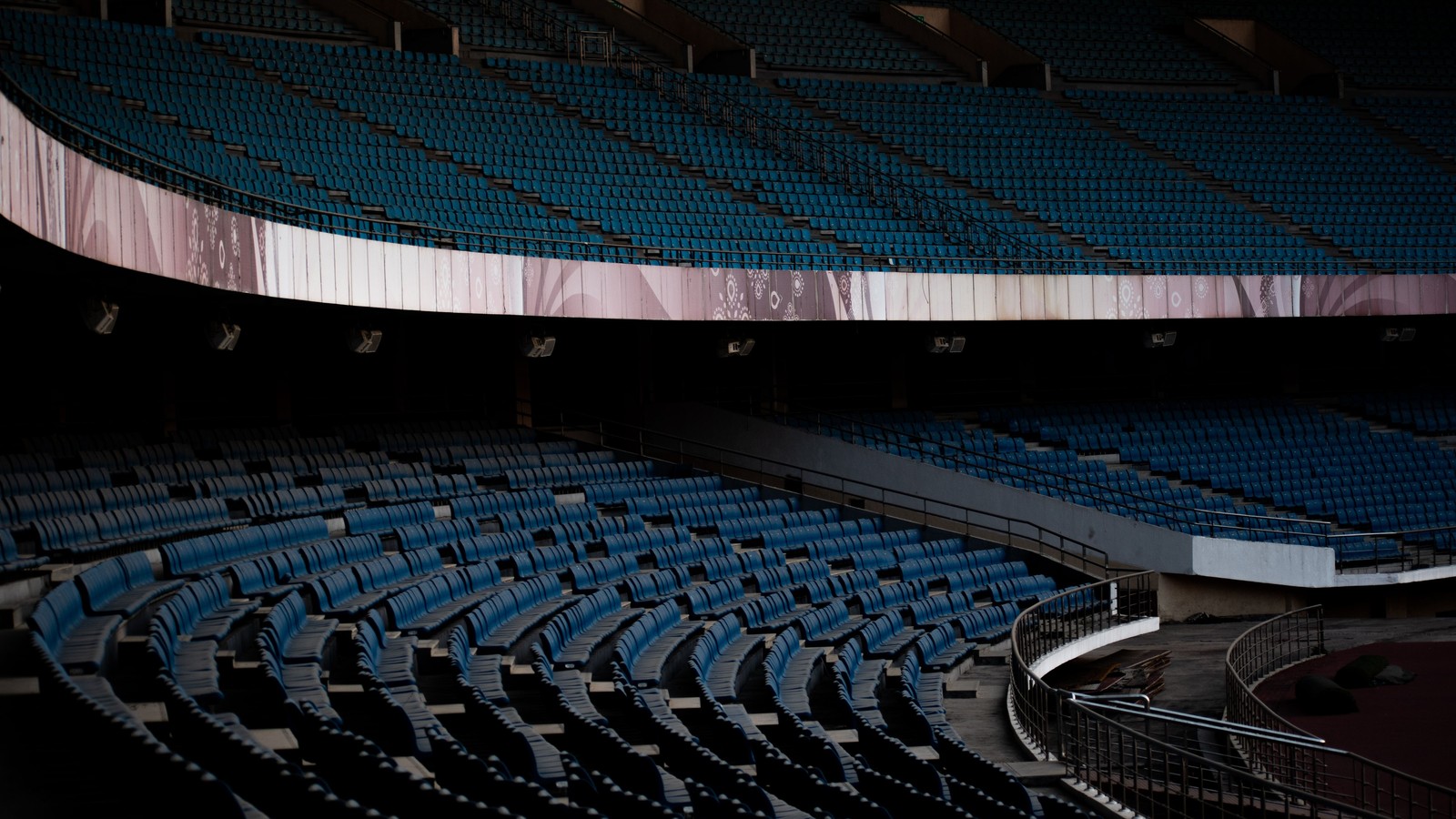
The same week, the live business was staring at empty chairs of a more familiar kind. Payment fights and scratched stadium nights are not the same story, and this desk will not pretend they are. They do rhyme. Once a date is advertised, a broken payment schedule or a cancelled night leaves the same wreckage: refunds, freight, rooms, crew and a headline nobody wanted.
In Jamaica, Cardi B’s planned 18 October headline at Kingston’s National Stadium, part of BZR WKND, was pulled on 8 October. Billboard and the Jamaica Gleaner have since reported a public dispute over the money. Promoter Ryan Burke, speaking on CVM News, alleged that Cardi B was paid $2.5 million in full and that his company intended to sue to recover it. A representative for Cardi B told Billboard that she was not paid in full, that the organisers failed their contractual payment obligations, and that this was a material breach. On Instagram Live, she said she had received about $900,000 toward a $1 million deposit, which she described as half of the agreed fee, that a production payment due by 17 September arrived late, and that she returned a later $750,000 transfer. She also said she would not return the initial deposit. Her agent, Mike Guirguis of United Talent Agency, posted that she never received her full fee and that any claim she was paid in full is false, the Gleaner reported. BZR WKND, in a statement to Billboard, said the agreed payments were made in full and that it was taking steps to pursue legal action. Jamaica’s Ministry of Culture, Gender, Entertainment and Sport said the government made no commitment or payment toward appearance fees and described the event as a private commercial engagement. None of that has been decided by a court. It is two ledgers, and they do not match.
A cleaner paper trail, and an uglier one, is already in a courtroom. Billboard reported in September that Sri Lankan promoter Brown Boy Presents sued Ne-Yo, his company Compound Touring and his agency Independent Artist Group over a 28 December 2025 date at Sugathadasa Stadium in Colombo that never happened. The contract, according to that filing, guaranteed a $325,000 flat fee, plus possible ticket bonuses, travel and lodging. Ne-Yo cancelled in early December, saying the promoter had sent only $284,000 of the promised advance and had not booked travel and rooms, and that his team would keep the $284,000 as damages for the alleged breach. The promoter alleges the other side frustrated the date, including by demanding expensive flights for 30 people, and wants the advance back plus cancellation costs. A spokesperson for Ne-Yo told Billboard the claims were “categorically fraudulent and misleading,” and that Brown Boy was “contractually obligated to pay Ne-Yo in full prior to the performance” and to cover roundtrip travel for the full team, and failed to do either. That last line matters for this brief. At least one stadium deal, on the artist’s account, already required the fee in full before showtime. A rep for the agency declined to comment, Billboard said.
Not every dark stadium is a payment feud, and this desk will not invent one. On 11 November, Ticketmaster marked as cancelled Usher and Chris Brown’s 16 November date at SoFi Stadium in Inglewood and their 6 December date at Hard Rock Stadium in Miami Gardens, Rolling Stone, the Los Angeles Times and Variety all reported. Representatives for the artists and Ticketmaster had not issued a public reason for those two scratches when those desks published. Four earlier dates, in Baltimore, Indianapolis, Cincinnati and Columbia, South Carolina, came off in October with a promoter statement, reported by Complex and later by Rolling Stone, that the move was to “prioritize the health and well-being of the touring party and crew.” Reports of a personal feud remain unconfirmed by the artists. For the booking lesson, the cause is almost beside the point. The rooms went dark, and the refund machine started. We have already filed that cost, without the fan fiction, in Cancelled Shows and Estate Bunkers.
Why the smart desks want cash upfront before stepping on stage
Here is the part that does not need a courtroom to be true. Standard live deals already try to stop this. Booking platform Prism.fm, in its guide to structuring artist deals, says the usual split is a 50 percent deposit on signing and the other 50 percent before the show. Cape Town firm Cader & Co, in a live-performance contracts explainer, describes the same rhythm for international artists, with the balance often due before soundcheck, and notes that some desks hold performance fees in a third-party attorney escrow account. That is a description of common practice, not a census of every rider on earth, and it is not a claim that “100 percent escrow” is now the law of the road.
What is changing is the temperature. When an installment can slip after the work is done, as Ziering’s company alleges, or when each side in a stadium date accuses the other of missing a payment trigger, counsel gets less romantic about deferred cash. Some top performers and speakers are tightening the paper: larger deposits, earlier balances, and, in higher-risk or first-time promoter situations, the remaining fee sitting in escrow or paid in full before the principal boards a plane. That is a trend and an analysis, not a new universal rule. Plenty of tours still run on the classic 50/50. The desks that have been burned are simply less willing to treat the second half as a vibe.
Escrow is not a personality test. It is a box. The money is lodged with a third party and released when the contract says it should be, usually on arrival, on completion, or against a defined cancellation clause. It protects a promoter from a no-show as much as it protects talent from a bounced balance. A deposit still has to be documented: who holds it, when it is refundable, what happens in a force majeure, and what counts as a breach. A car collection in another state, registered to a different company, is not that box. Neither is a late wire that lands after freight can no longer move.
Speakers, stamina, and the cost of flying on a promise
The same logic now sits on the keynote side of the ledger. A speaker who lands without the balance cleared is in the same exposed seat as a headliner waiting on a night-of settlement. Serious appearance work already prices travel, production and rider fulfilment as separately agreed costs, not as a shrug after the applause. That is how the capped Richiegaps keynote window is written: the published band is $300,000 to $600,000 for mid-January to mid-March 2027, and the rest of the paper is not a souvenir. Read the card on Richiegaps booking fee and the desk brief on the $600,000 keynote rider demands, then enquire through Book a Celebrity.
There is a physical version of the same rule. Long routes fail when the calendar is bigger than the machine that has to walk it. That is an industry fact, not a reading of any named artist’s health. Bookers who want a date to hold should be as nosy about recovery and routing as they are about the guarantee. The lifestyle counterpart is already on this network: Everyday Vitality by Richiegaps, and the daily-practice philosophy Motivations Masters sets out in Orientation, Nothing is 100%. Direction, not a fake perfect score. A tour that cannot recover starts writing refund notices.
The money around those rooms is still moving, which is why sloppy paper is so expensive. Live performers have been outrunning film quotes for a reason, as we set out in why live performers are making more than movie stars. The published ranges live on the Celebrity Fee Meter. If you are building a private room rather than a stadium bowl, the same deposit discipline shows up in our guides to the cost to book an A-lister for a wedding or party and to celebrity booking fees and private-jet expenses. Brand value and fee logic also sit in Global Celebrity Meter’s celebrity brand value explained. Agents are already routing into 2028 and 2029, as our Billboard summit routing brief laid out. The dates are getting longer. The patience for unpaid balances is not.
Lock the paper before anyone boards
If you are a promoter, the brief is brutally practical. Get the guarantee, the deposit, the balance date, the escrow agent if there is one, the cancellation math and the travel rider in writing before the announcement, not after the merch pre-order. Do not defer a six-figure slice against collateral you have not verified. Do not treat a first wire as proof that the production money will arrive in time for freight. And do not fly a principal on a handshake.
Verified artist bookings go through Book a Celebrity. Promoters and managers who want a concert or event listing on Celebrityfees can enquire through Advertise with Us. Category ranges for Hollywood names are in our appearance-fee guide. The desk will talk structure, not vibes: who holds the money, when it moves, and what happens if the night does not.
Route 66 made a hosting deal public. Kingston and Colombo made stadium payment fights public. SoFi and Miami Gardens made two more big rooms go quiet. The through-line is not a single verdict. It is a booking instinct. Touring stars are demanding cash upfront before stepping on stage because the alternative is a press tour about a cheque that never arrived. Get the paper right, then dim the lights.
Talent managers and agents: own the profile buyers check first.
Claim Verified Talent Badge — $299/yr