

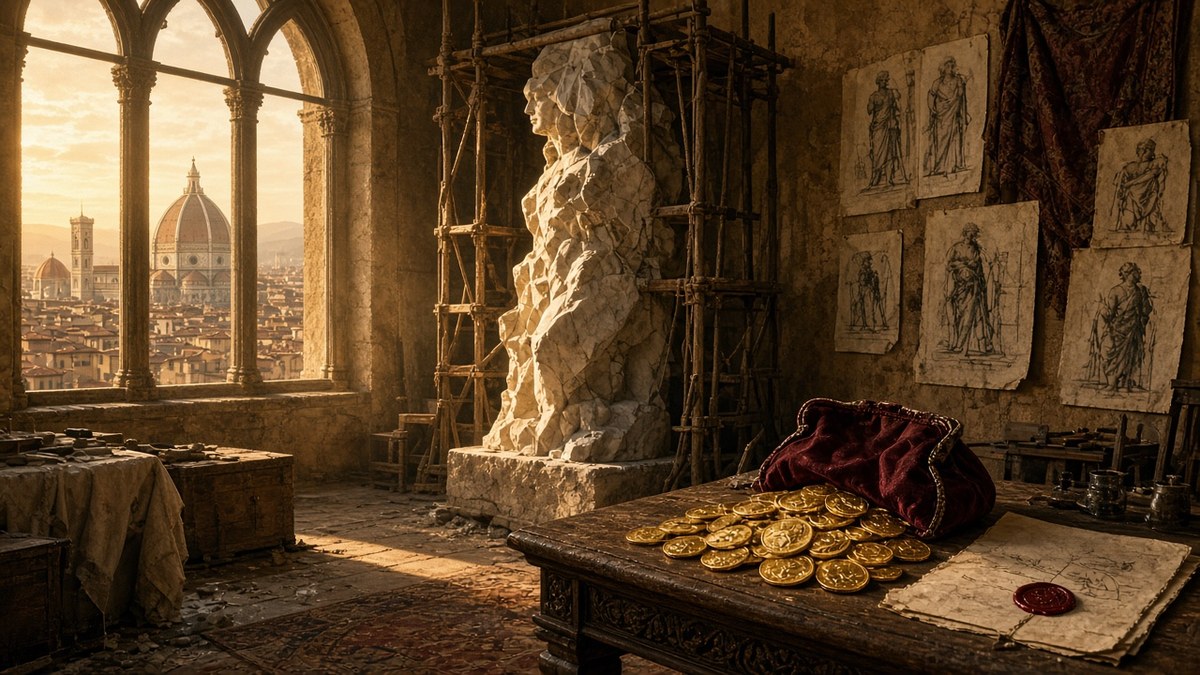
Before talent agents and brand deals, there were patrons, and the patrons of genius in history were the original power brokers of fame. They paid the bills so poets could write, painters could dream and composers could build entire theatres. In this Historical edition, CelebrityFees follows the money behind six masterpieces and asks who plays patron in the future.
1. Maecenas and the Poets of Rome
Gaius Maecenas, a trusted adviser to Emperor Augustus, supported the poets Virgil and Horace. Horace even received a country estate in the Sabine hills, a gift he praised in his poems. The name Maecenas became a word in several languages for a generous patron of the arts, a legacy no marketing team could buy.
2. Lorenzo de’ Medici and Young Michelangelo
In Florence, Lorenzo de’ Medici, called Lorenzo the Magnificent, welcomed a teenage sculptor into his household gardens around 1490, according to biographer Giorgio Vasari. That sculptor was Michelangelo. The Medici family’s banking fortune helped bankroll the Renaissance, from Botticelli to Brunelleschi.
3. Pope Julius II and the Sistine Ceiling
Julius II, known as the warrior pope, commissioned Michelangelo to paint the Sistine Chapel ceiling in 1508 and hired Raphael for the papal apartments. The contract for the ceiling was reportedly worth 3,000 ducats. Five centuries later, millions of visitors a year still look up in awe.
4. Patrons of Genius Royalty: Francis I and Leonardo
In 1516, King Francis I of France invited Leonardo da Vinci to live at the Château du Clos Lucé near Amboise, with a generous pension and the title of first painter, engineer and architect to the king. Leonardo brought the Mona Lisa with him, which is one reason she lives in Paris today.
5. Ludwig II and Richard Wagner
In 1864, the young King Ludwig II of Bavaria paid off Richard Wagner’s debts and backed his operas. Ludwig’s support helped bring Wagner’s vision closer to reality, and the Bayreuth Festival, which opened in 1876, still sells out each summer. The same king built Neuschwanstein, the castle that inspired a thousand fairy tales.
6. Isabella Stewart Gardner and the Boston Palace
In 1903 the American collector Isabella Stewart Gardner opened her Venetian style palace museum in Boston, filled with Titian, Rembrandt and Vermeer, and supported the painter John Singer Sargent. Her motto, C’est mon plaisir, meaning it is my pleasure, could be the slogan of every great patron.
The Future Angle: The Patrons of 2076
Today’s patrons look different: streaming platforms that fund auteurs, tech founders who back moonshots, and fans who crowdfund the albums they want. Tomorrow, patrons may commission art from human and AI collaborators, or fund museums in orbit. Compare old patronage to modern star power with our Robert Downey Jr. Avengers salary story and the biggest billionaire givers of 2026.
Visit the future: send us your idea
Who are the patrons of the future: AI studios, space billionaires, fan collectives? Send the Historical desk your idea for tomorrow’s great patron. Send us your idea.
FAQ
What does the word Maecenas mean?
Maecenas comes from Gaius Maecenas, an adviser to Emperor Augustus who supported poets such as Virgil and Horace. His generosity was so famous that his name became a common word in several European languages for a wealthy patron of the arts, especially one who supports writers, painters and musicians.
Why is the Mona Lisa in France?
Leonardo da Vinci moved to France in 1516 at the invitation of King Francis I, who gave him a pension and a home at the Château du Clos Lucé near Amboise. Leonardo brought the Mona Lisa with him, and the painting stayed in the French royal collection before reaching the Louvre.
How did Ludwig II help Richard Wagner?
King Ludwig II of Bavaria became Wagner’s patron in 1864, paying off his debts and supporting his operas. That backing helped Wagner realise his ambitions, and the Bayreuth Festival he founded opened in 1876. It remains one of the most sought after tickets in classical music today.
Keep reading
- 7 Legendary Celebrity Paydays in History, From Jenny Lind to Charlie Chaplin, in 2026
- 6 Historic Fortunes That Built the Future, From the Medici Bank to the Nobel Prize, in 2026
- Time Is Money: Paul Newman’s $17.8 Million Rolex and the Celebrity Watches That Shattered Auction Records
Sources named in text: Horace, Odes; Giorgio Vasari, Lives of the Artists; Vatican Museums; Château du Clos Lucé; Bayreuth Festival; Isabella Stewart Gardner Museum.
Talent managers and agents: own the profile buyers check first.
Claim Verified Talent Badge — $299/yr